- On 29 Jun 2026
- In Travel
Falconry Displays You Can See on a Desert Safari
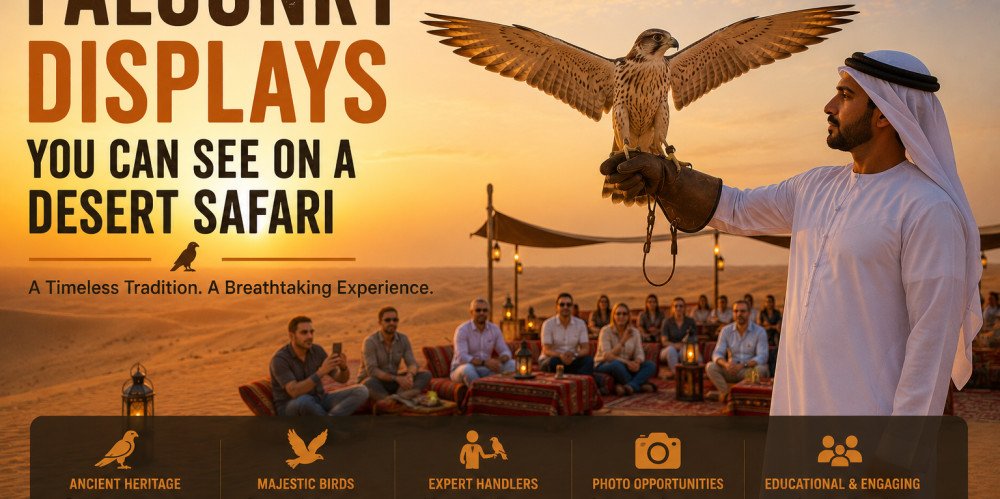
Among the activities at a desert camp, a falconry display offers something different. While dune bashing and sandboarding bring speed and thrills, falconry shows a quiet skill passed down through generations. Watching a trained falcon up close is one of the more memorable cultural moments on a desert safari Dubai.
This guide explains what falconry
is, why it matters in this region and what to expect from a display on your
trip. If you have never seen these birds in action, it is well worth seeking
out.
What
Falconry Is
Falconry is the art of training
birds of prey to hunt alongside people. A handler, known as a falconer, works
with a falcon to catch small game in the wild. The bird flies free, then
returns to the falconer`s gloved hand, drawn back by training and trust.
Falconry is a very old practice among the Arabs
with thousands of years of history behind it. It requires a lot of patience for
one to perfect falconry techniques.
The result is a partnership where a wild bird chooses to work with its handler.
On a desert safari, you see a
glimpse of this skill in a short display, often with explanation of how the
training works.
Why
Falconry Matters in the Region
Falconry holds deep meaning in the
desert culture of this region. Unlike other bird
lovers who regard falcons as pets, for the Bedouins, falcons were partners. In
a place where there wasn’t much food, a falcon trained could hunt prey that
would help a family.
Falcons were loved and well-taken care of,
being part of the family. Hunting and falcon training became an inherited skill
and tradition in the desert culture. Up to date, falconry has remained a
protected tradition with the falcon regarded as the national bird.
A falconry show is a way of embracing the rich
heritage. It is a window into a practice that shaped
life in the desert for centuries.
What
a Display Involves
A falconry display at a desert camp
is usually short and close up. A falconer brings out a trained bird, often
perched on a gloved hand or a stand. They explain a little about the falcon,
its training and its place in desert life.
You may see the bird fly a short
distance and return to the glove or respond to the falconer`s signals. Some
displays let guests hold the bird on a gloved hand for a photo, under the
falconer`s guidance. The handler keeps full control throughout to ensure the
bird stays calm.
The display fits well into the
relaxed setting of an evening desert safari, adding a cultural touch alongside
the dinner and shows. Some morning trips include it too.
Meeting
the Falcon Up Close
Seeing a falcon at close range is striking. They are strong but graceful with piercing eyes, talons and gorgeous feathering. They have been bred specifically for flight and hunting purposes, and one can see it in their physique.
These birds for the shows have been trained and tamed to be around humans. When one perches on your gloved hand, you feel its weight and presence. It is a rare chance to be near a bird of prey which most people only ever see at a distance.
For many guests, holding or standing beside a falcon is a highlight they did not expect and it makes for a memorable photo.
Photos with a Falcon
A falconry display offers fine photo opportunities. The bird on a gloved hand, set against the desert backdrop, makes a striking image. If the camp allows guests to hold the falcon, ask a friend or the falconer to capture the moment.
Follow the falconer`s guidance closely when posing with the bird, keeping calm and still so the falcon stays settled. The soft light of the morning or the golden glow before sunset suits these photos well. A picture with a falcon is one of the more unusual mementos you can bring home from the desert.
Respecting the Birds
Good falconry treats the birds with care and this is worth looking out for. Healthy falcons appear calm, alert and well kept, handled gently by skilled falconers. The birds should never seem distressed or forced.
If you have concerns about animal welfare, choose a reputable tour and watch how the falcons are treated. Established operators that include falconry usually work with experienced handlers who respect the birds, since falconry is a tradition built on care for the animals.
A short, well run display with a calm, well treated bird is both humane and a genuine cultural experience.
Learning About the Tradition
Beyond watching, a falconry display is a chance to learn. The falconer often shares how the birds are trained, how the bond is built and how falconry was used in the past.
Asking questions, where the setting allows, helps you understand the skill and heritage behind it. Knowing the history turns a simple display into a richer cultural moment. It is one of the more educational parts of a desert trip.
Tips for Enjoying a Falconry Display
To get the most from it, stay calm and quiet near the bird, since falcons respond to a settled environment. Follow the falconer`s instructions on how to stand, hold and pose. Move slowly and avoid sudden gestures that might startle the bird.
Make sure your camera is at hand, but remain courteous to the bird and handler. You should also inquire about holding the falcon for the photograph. To ensure you have the best Dubai falconry experience during the desert safari, try to find a tour where there is a falconry display.
Final Thoughts
A falconry display brings a quiet, cultural depth to a desert safari Dubai. Watching a trained falcon, learning about its role in desert heritage and perhaps holding one on a gloved hand are experiences that stay with you.
In a trip full of speed and thrills,
falconry offers something calmer and older. Seek out a tour that includes it,
treat the birds with respect and you will carry away both a striking photo and
a connection to one of the desert`s most cherished traditions.