- On 01 Jul 2026
- In Travel
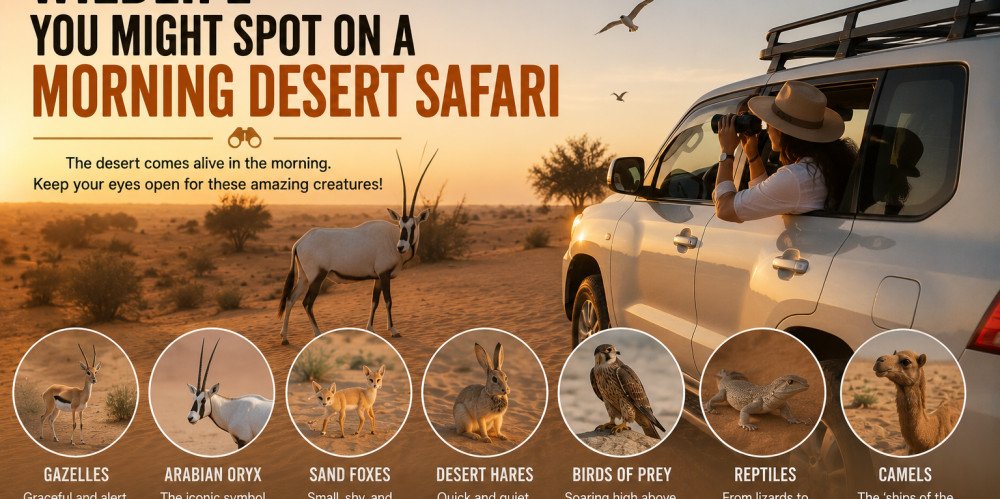
Wildlife You Might Spot on a Morning Desert Safari
The desert of UAE looks empty at first glance in the morning but it teems with life adapted to its harsh conditions. A morning desert safari, with its cooler air and active wildlife, offers the best chance to spot some of these creatures. From birds to lizards to the occasional larger animal, the desert has more life than visitors expect.
This guide covers the wildlife you
might see on a morning trip. It looks at the creatures of the dunes, why the
morning is best for spotting them and how to make the most of the chance.
Why
the Morning Is Best for Wildlife
The desert heat shapes when animals
are active. In the fierce midday sun, most creatures hide in shade or burrows
to escape the heat. The cooler hours of the morning and evening are when they
come out to feed and move about.
A morning desert safari which takes place in
the cool early hours, catches this active period. The animals are more likely
to be out and about, making sightings more common. The soft light also makes them easier to spot and
photograph.
So if seeing wildlife interests you,
the morning is the better choice. The cooler conditions bring out the creatures
that the midday heat keeps hidden. The morning
offers the best odds while sightings are never guaranteed.
Birds
of the Desert
Birds are among the more visible
desert wildlife. Various species live in or pass through the desert, adapted to
the dry conditions. You might spot larks which are well suited to desert life
or other small birds flitting among the sparse vegetation.
Birds of prey, like falcons and
other raptors, hunt in the desert too. Seeing one soaring overhead is a fine
sight. The falcon, of course, holds special cultural meaning in the region and
you may see trained ones at the camp as well as wild ones in the air.
The morning is a good time for
birdwatching, as birds are active in the cool air. Keep an eye on the sky and
the vegetation. A pair of binoculars helps if birds especially interest you,
though many can be seen with the naked eye.
Reptiles
and Small Creatures
The desert is home to many reptiles,
well suited to the dry heat. Lizards are common, scuttling across the sand or
basking in the morning sun. Various species live in the dunes and you may spot
them as they warm up in the cool early hours.
Other small creatures live in the
desert too, from beetles and insects to small mammals that emerge at cooler
times. These are easy to overlook, but a keen eye spots them. The sand often
shows their tracks, even if the animals themselves stay hidden.
Snakes also live in the desert although
they are shy and rarely seen. They are most active in cooler hours but tend to
avoid people. There is no need to worry, as encounters are uncommon and the
creatures keep their distance. Simply enjoy spotting the more visible reptiles.
The
Arabian Oryx and Gazelle
In some desert areas, particularly
conservation reserves, larger animals roam. One of the
animals which are used as symbols of wildlife in the region is the Arabian
oryx, a unique white antelope with long horns.
Gazelles are another type of animals that can
be found in the desert. It will be very exciting to see these animals in the wild. They are more likely to be spotted in protected reserve
areas than on standard dune safaris.
If seeing these larger animals
appeals to you, look for safaris that visit a desert conservation reserve.
These trips focus more on wildlife and nature which offer better chances to see
the oryx and gazelle. They tend to cost more but reward nature lovers.
The
Desert Fox and Other Mammals
Desert mammals are those that have evolved to
survive in the harsh environment. However, many of them are nocturnal animals,
making it difficult for one to see them. The desert fox is an example of such
an animal; it is a tiny fox which survives in the desert.
There are other small mammals that also exist
in the desert. Most are shy and seldom seen by
visitors. Their tracks in the sand may be the only sign of them. The desert holds more mammal life than it appears although it
stays hidden.
The early morning offers a slim
chance of spotting these creatures before the heat drives them to shelter.
While sightings are rare, the possibility adds interest to a morning trip. Keep
your eyes open, especially in quieter areas away from the busy camps.
Plants
and the Wider Ecosystem
The wildlife also exists in a broader desert
environment along with some tough vegetation. The tough vegetation existing in
the desert includes grasses and shrubs which have managed to survive in the
harsh conditions. Ghaf tree is an example of such tough desert vegetation.
The tough
vegetation existing in the desert forms the basis for life in the desert and
feeds on the animals and shelters them. Seeing both the animals and plants
together provides the complete picture of life in the desert.
Understanding this helps you
appreciate the wildlife you spot. The creatures depend on the plants which
depend on the scarce water. The whole system is finely balanced, adapted over
time to the harsh conditions. It is a quiet wonder of the desert.
Tips
for Spotting Wildlife
A few tips improve your chances.
Choose a morning trip, when animals are most active. Keep quiet and observant,
as noise scares creatures away. Look at the vegetation, the sky and the sand,
including for tracks. Bring binoculars if wildlife especially interests you.
For the best chance of larger
animals like the oryx, choose a safari to a conservation reserve which focuses
on wildlife. Be patient, as sightings take luck and attention.
A quieter morning trip or a nature reserve tour
offers the most for the best desert safari Dubai wildlife experience. Manage your expectations, as the desert is not a zoo, but
enjoy the creatures you do spot. Every sighting is a small reward.
Final
Thoughts
The desert holds more life than it
appears and a morning desert safari offers the best chance to see it. Birds,
lizards, insects and, in some areas, larger animals like the oryx and gazelle
make their home in the dunes, active in the cool early hours.
Choose a morning trip, keep quiet and observant and consider a nature reserve tour for larger animals. While sightings are never guaranteed, the desert rewards a keen eye. Appreciating the wildlife and alongside the hardy plants that support it adds depth to your trip. The desert is not empty, but full of life adapted to one of the harshest places on earth.