- On 30 Jun 2026
- In Travel
What to Wear for a Desert Safari Dubai
Choosing the right clothes for a desert safari Dubai makes a real difference to your comfort. The desert can be hot by day and cool by night and the activities involve sand, sun and movement. Dress well and you barely think about it. Dress poorly and you spend the trip too hot, too cold or covered in grit.
This guide covers what to wear for
both a morning and an evening trip. It focuses on clothing and footwear, so you
arrive dressed for the dunes whatever the season.
The
General Approach
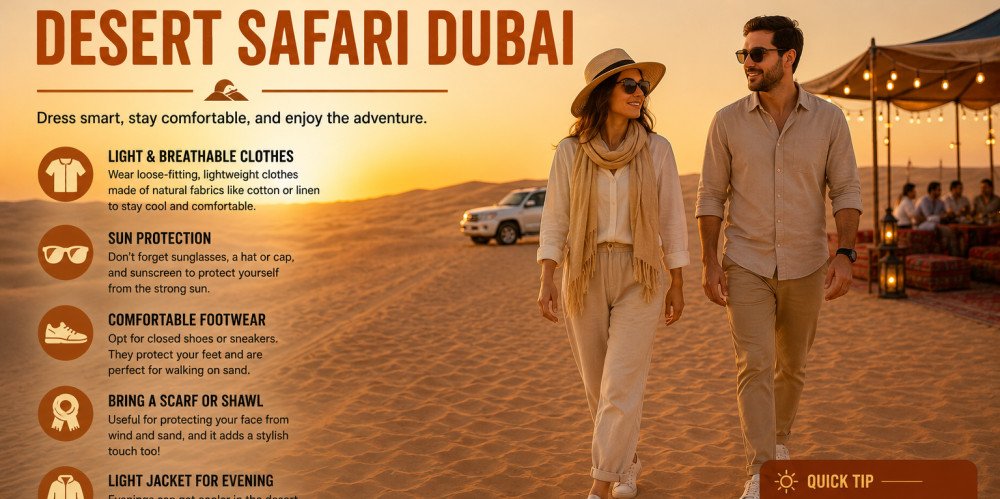
The key to dressing for the desert
is comfort over style. Loose, light clothing suits the heat and the activities
far better than tight or heavy outfits. You will be sitting, climbing dunes and
perhaps riding a camel, so freedom of movement matters.
Natural fabrics like cotton work
best, since they breathe and keep you cool. Pale colours reflect the sun better
than dark ones which can grow hot. The aim is to stay comfortable through the
changing conditions of the day.
Modesty is also worth keeping in
mind, given the local culture. Clothing that covers the shoulders and knees is
respectful and it happens to protect against the sun too. There is no strict
dress code on a tour, but sensible, modest clothing fits both the setting and
the heat.
Clothing
for the Day
During the day, light and loose is
the rule. For a morning desert safari or the daytime part of an evening trip,
choose breathable clothing that keeps you cool. Loose cotton trousers or a
long, light skirt protect your legs from the sun and from the saddle if you
ride a camel.
A loose top with sleeves shields
your arms from the strong sun. Long but light clothing actually keeps you
cooler than bare skin in the desert, since it blocks the direct rays. Pale
colours help reflect the heat.
Avoid tight jeans or heavy fabrics
which trap heat and limit movement. The goal is clothing that lets air flow and
keeps the sun off, leaving you comfortable through the day`s activities.
Dressing
for the Evening
The evening brings a twist, since
the desert turns cool after dark. On an evening desert safari, you start in the
afternoon warmth but stay into the cool night. So you need to dress for both.
Wear light clothing for the warm
early part, then bring a layer for later. A jacket, jumper or shawl keeps you
warm once the sun sets and the temperature drops. People are often caught out
by how cool the desert gets after a hot day, so a warm layer is essential,
especially in winter.
Layering is the answer. Start light,
add the warm layer when the chill comes and you stay comfortable from the
sunset through the dinner and shows.
Footwear
Footwear matters more than many
expect. Closed shoes or trainers are far better than sandals or flip flops.
Sand gets everywhere and open shoes fill with it quickly which grows
uncomfortable.
Closed shoes also protect your feet
during activities like sandboarding, climbing dunes and walking around the
camp. In the day, the sand can grow hot enough to be unpleasant on bare feet.
Trainers or sturdy closed shoes handle all of this well.
Some people slip off their shoes at
the camp to feel the cool evening sand which is fine. But for the active parts
of the trip, closed footwear is the sensible choice.
Headwear
and Sun Protection
The sun is strong, so protecting your
head and face is wise during the day. A wide brimmed hat or a cap shades your
face and neck. Sunglasses cut the glare off the bright sand which can be
intense.
These matter most on a morning
desert safari, when the sun climbs through the trip and during the daytime part
of an evening tour. By the evening, once the sun sets, you can set the hat and
sunglasses aside.
A light scarf can double as sun
protection and a way to keep sand off your face if the wind picks up. It is a
useful, flexible item for the desert.
Dressing
by Season
The season shapes your choices. In
winter, from November to March, days are mild and nights are cool. Light
clothing suits the day, but a warm layer is a must for the evening, since
winter nights can get genuinely cold.
In summer, the heat is intense. Very
light, loose, covering clothing keeps you cool and shields you from the sun.
The evening stays warm, so you need less of a layer than in winter, though a
thin one is still handy.
Spring and autumn sit in between,
with warm days and cooler evenings. The same approach works year round: light
for the day, a layer for the evening, adjusted for how hot or cool the season
runs.
What
to Avoid
A few choices make the trip less
comfortable. Tight clothing limits movement and traps heat. Heavy fabrics grow
hot and sweaty. Open shoes fill with sand. Brand new white clothing may pick up
dust and henna stains.
Very short or revealing clothing is
best avoided too, both for sun protection and out of respect for local culture.
High heels are impractical on sand. Steering clear of these keeps you
comfortable and suitably dressed.
For the best desert safari Dubai
experience, simple, sensible clothing beats anything fancy. The desert rewards
practicality over fashion.
Final
Thoughts
Dressing for a desert safari Dubai
is straightforward once you know the conditions. Light, loose, covering
clothing suits the daytime heat, while a warm layer handles the cool evening.
Closed shoes keep out the sand and a hat and sunglasses guard against the sun.
Adjust for the season, lean towards modest and practical and you will stay comfortable from the dunes to the camp. Get the clothing right and you can forget about it and simply enjoy the trip. The desert asks only that you dress for the sun by day and the chill by night.