- On 27 Jun 2026
- In Travel
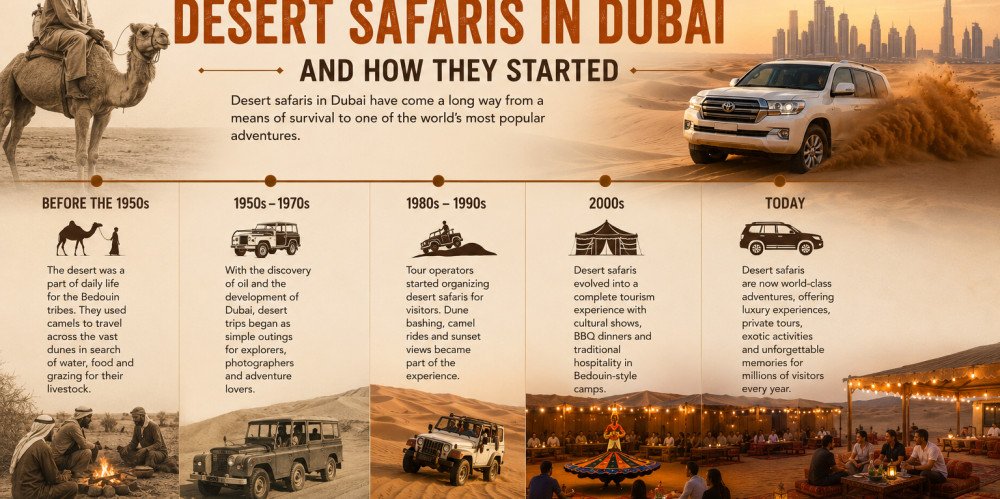
The History of Desert Safaris in Dubai and How They Started
A desert safari Dubai feels like a polished day out today with 4x4s ride, buffet dinners and live shows. The trip has roots that run much deeper than the tourism that surrounds it. The sand that visitors cross for fun now a days was once a place where survival depended on knowing the land.
Understanding how the safari grew
from desert life adds meaning to the experience. This article looks at where it
began, how it changed and how it became one of the city`s most popular
activities.
Life
in the Desert Before the City
Long before Dubai`s towers rose, the
land was home to Bedouin tribes. They moved across the sand with camels and
goats, following water and grazing. Their lives
were shaped by the desert which gave little and needed much effort.
Camels were central to desert way of life. They carried people and goods, provided milk and could
travel for days without water. The skills that the Bedouin built, reading the
dunes, finding their way by the stars, surviving extreme heat, were passed down
through generations.
Falcons played a part too. Trained for hunting and they helped catch small game in a
land where food was scarce.
This bond between people, camels and falcons formed the heart of desert
culture.
The
Discovery of Oil and Rapid Change
The middle of the twentieth century
brought huge change. Oil was found in the region and the wealth it created
transformed Dubai within a few decades. Roads, buildings and an airport rose
where there had only been sand and small settlements.
As the city grew, fewer people lived
the old desert life. The camels, the tents and the long crossings became part
of the past rather than the present. For many, this raised a worry. The
heritage that had defined the place for centuries was fading from daily life.
This tension between a fast growing
city and an older way of living set the stage for what came next.
The
Birth of Desert Tourism
By the 1980s and 1990s, Dubai was
drawing more visitors. Tour operators saw a chance to share the desert with
them. Rather than let the old culture disappear, they built trips that brought
guests into the dunes and showed them how desert life had once worked.
Early tours were simple. A 4x4 took
small groups onto the sand, drivers showed off dune driving and camps offered
tea, dates and a taste of traditional food. Camel rides and basic shows
followed. The aim was to give visitors a feel for the heritage while offering a
day of adventure.
These first safaris were rougher
than today`s. There were fewer camps, smaller groups and less polish. But they
planted the idea that the desert could be both a link to the past and a draw
for tourism.
Growth
Into a Major Industry
As Dubai`s tourism boomed, so did
the safari business. More operators entered the market, camps grew larger and
the range of activities widened. Sandboarding, quad biking and falconry
displays joined the camel rides and dune driving.
The evening tour, built around
sunset and dinner, became the most popular format. Camps added stages for
tanoura and belly dancing, along with fire shows to close the night. Buffets
replaced simple snacks and seating became more comfortable.
Competition pushed standards up.
Today you can find everything from budget shared trips to luxury private
safaris with fine dining. The best desert safari Dubai options now rival a
polished restaurant or show for comfort, while still keeping the link to the
dunes.
Keeping
Heritage Alive
For all the modern touches, much of
the safari still points back to desert tradition. The Arabic coffee and dates
served on arrival echo old customs of welcome. Camel rides recall the animal
that once made desert travel possible. Falconry shows keep an ancient hunting
skill in view.
This matters to many people in
Dubai. The safari is not only a business but a way of holding onto a culture
that the fast pace of the city might otherwise leave behind. Visitors get
entertainment and the heritage gets a stage.
The
Modern Safari Experience
A desert safari Dubai today blends
old and new with little friction. A 4x4 drives where camels once walked. A
buffet sits where a simple campfire meal might have been. Yet the core idea,
taking people into the dunes and sharing desert life, has not changed since the
first tours.
The trips also adapt to the seasons,
much as desert dwellers once did. Cooler months bring the busiest period, while
summer trips lean towards the early morning to avoid the heat. The land still
sets the terms, even for a modern day out.
Why
the History Adds to the Trip
Knowing where the safari came from
changes how it feels. The dune driving is not just a thrill ride but a nod to a
land that once tested everyone who crossed it. The
camel sitting at the camp is a link to centuries old way of travel in desert. The falcon on a handler`s arm carries a skill older than
the city itself.
Seen this way, the trip becomes more than entertainment. It is a short window into a way of life that built the region, kept alive for those who come to visit.
The desert safari Dubai grew from
real desert life, not from a marketing plan. It began with the Bedouin and
their camels, survived the rush of oil and rapid building and turned into one
of the city`s signature experiences.
The best desert safari Dubai trips still honour that history while offering a comfortable, modern day out. When you next cross those dunes, remember that people once crossed them not for fun, but to live. That knowledge gives the sand a depth the photos never show.