- On 29 Jun 2026
- In Travel
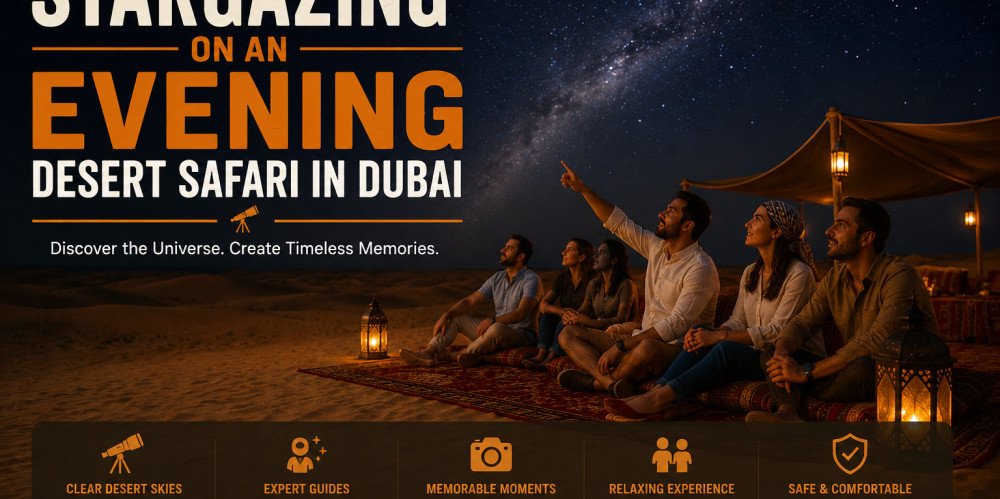
Stargazing on an Evening Desert Safari in Dubai
In the city, the night sky stays dim. Bright lights drown out all but the strongest stars, so most visitors never see more than a handful. Out in the desert, away from those lights, the sky opens up. An evening desert safari gives you a chance to look up and see the stars as they truly are.
This guide covers stargazing in the
Dubai desert, why the sky looks so different out there and how to make the most
of it. If you have only ever seen a city sky, the desert version may surprise
you.
Why
the Desert Sky Is So Clear
The reason comes down to light.
Cities glow at night and that glow, called light pollution, washes out the
fainter stars. The further you get from it, the more the sky reveals.
The desert sits far from the city`s
lights, so the sky there stays dark. With little to compete, hundreds of stars
appear that you would never see in town. On a clear night, the difference is
striking, with the sky scattered thickly with points of light.
The dry desert air helps too. The view stays sharp and clean with little moisture or haze. These conditions make the desert one of the better places
near the city to look up at night.
When
the Stars Come Out
On an evening desert safari, the
stars appear after sunset. As the last light fades and the sky darkens, the
first bright stars show, followed by more as the night deepens. By the time
dinner is served, the sky is full.
The best viewing comes later in the
evening, once it is fully dark. The camp lights and the fire show add some
glow, but stepping a little away from them improves the view. Looking up
between courses or after the meal is the easiest way to catch the sky at its
best.
The season matters too. Winter
nights are longer and often clearer, giving more time and better conditions for
stargazing. The cool air of those nights also makes standing out under the sky
comfortable.
What
You Can See
With the naked eye, the desert sky
offers plenty. On a clear, moonless night, you can pick out far more stars than
in the city. The brighter constellations stand out clearly, their shapes easier
to trace against the dark.
You may see the faint band of the
Milky Way stretching across the sky, though this needs a very dark night and a
little distance from the camp lights. Planets often appear as steady, bright
points that do not twinkle like stars. Shooting stars cross the sky now and
then, especially during meteor showers.
Even without naming anything, the
sheer number of stars is the main reward. The sky feels deep and crowded in a
way the city never shows.
The
Effect of the Moon
The moon plays a big part in
stargazing. A full moon is beautiful, but its bright light washes out the
fainter stars, much as city lights do. On those nights, you see fewer stars but
a glowing, moonlit desert.
A new moon, when the moon is dark,
gives the best star viewing. The sky reaches its darkest
and the most stars appear with no moonlight. If stargazing matters to you, checking the moon phase
before you book can help you pick a darker night.
Either way, the moon adds its own
beauty to the desert night, lighting the dunes with a soft glow when it is
bright.
Stargazing
as Part of the Evening
Stargazing fits naturally into an
evening desert safari without needing a special tour. The trip already takes
you to a dark spot, gives you time at the camp after sunset and serves dinner
under the open sky. Looking up is simply part of the experience.
You can enjoy the stars while
eating, during the shows or by stepping a little away from the camp for a
clearer view. The relaxed pace of the evening leaves room to pause and take in
the sky. It needs no equipment, just a willingness to look up.
Some premium or private tours offer
a quieter, darker setting, which improves the view. A few even bring telescopes
or guides for those keen to learn more.
Tips
for Better Stargazing
A few simple steps improve what you
see. Let your eyes adjust to the dark, which takes around twenty minutes. Avoid
looking at your bright phone screen during this time, as it resets your night
vision each time.
Step away from the camp lights and
the fire if you can, finding a darker patch of sand. Lie back or look straight
up to take in more of the sky. A clear, moonless winter night gives the best
conditions, so plan around that if stargazing is a priority.
Bring a light jacket, since the
desert turns cool after dark and you may stand still for a while. For the best
desert safari Dubai stargazing, a smaller or private camp with less light suits
the activity better than a large, busy one.
Photographing
the Night Sky
Capturing the stars is harder than
seeing them. A phone camera struggles in the dark, though newer models with a
night mode can pick up some stars if held very still. A proper camera with a
tripod and a long exposure gives far better results.
If you want star photos, bring a
small tripod and learn your camera`s night settings before the trip. Even so,
the best way to enjoy the sky is often to put the camera down and simply watch.
The view in person beats any photo.
Final
Thoughts
Stargazing turns an evening desert
safari into something more than an adventure and a meal. Away from the city
lights, the desert sky reveals hundreds of stars, the bright constellations
and, on the darkest nights, the faint glow of the Milky Way.
It needs no equipment and no extra cost, only a moment to step away from the camp and look up. Pick a clear, moonless winter night for the best view, let your eyes adjust to the dark and the desert sky will show you something the city always hides.